Unified Access Gateway 2609: Why Upgrade from 2603


Covers UAG 2606 and 2609 · Based on official Omnissa release notes · November 6, 2026

I recommend updating due to a serious security vulnerability!

Why upgrade

If you are still running UAG 2603 (April 14, 2026), you have two releases to catch up on: 2606 (August 24, 2026) and 2609 (October 29, 2026). Jumping straight to 2609 gets you, in one step, the new AlmaLinux 9.6 operating system, TLS certificate replacement without downtime, the redesigned Admin UI and fixes for two CVEs.

This guide lays out what changes, which bugs are fixed and, most importantly, which behaviours change and must be checked before you upgrade. All information comes from the official Omnissa release notes; the screenshots come from my lab.
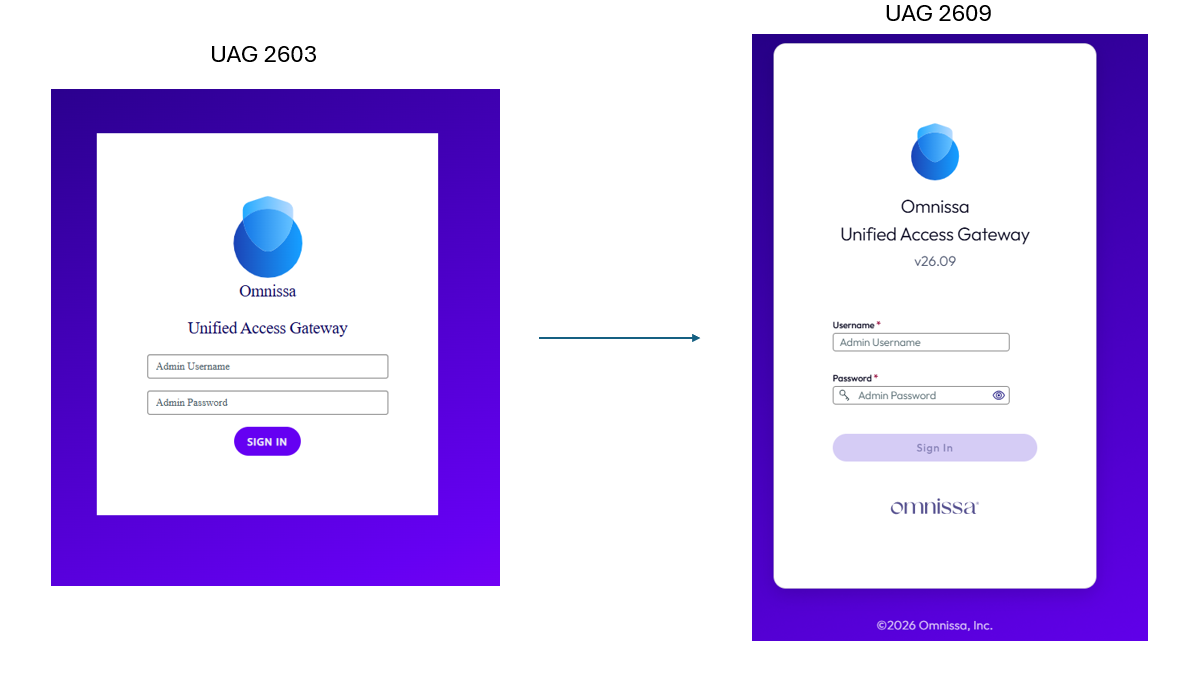
At a glance: 2603 → 2606 → 2609

Area

2603 (current)

2606

2609

Release date

Apr 14, 2026

Aug 24, 2026

Oct 29, 2026

Operating system

AlmaLinux 9.2

AlmaLinux 9.6

AlmaLinux 9.6 + OS and Java updates

Admin UI

Classic

Classic

Redesigned (dashboard, search, guided JSON import)

TLS certificates

RSA only, service restart on change

ECC/ECDSA, replacement without dropping sessions

Same as 2606

Authentication

SAML Artifact Binding, OIDC JWKS refresh

Multiple signing certs in IdP metadata, dedicated SAML signing cert

Strict X.509 client certificate validation

KVM / Nutanix AHV

OVA

Native QCOW2 image

Same as 2606, plus OpenShift (LA)

Declared CVEs

–

–

CVE-2026-91403, CVE-2026-114406, CVE-????

Open known issues

4

1

None

.

What’s new on 2606 (August 2026)

2606 is the platform release: it changes the operating system and makes certificate management far less disruptive.

General

•AlmaLinux 9.6: the OS moves from AlmaLinux 9.2 to 9.6. Omnissa states that hypervisor compatibility, hardening, password management, FIPS mode and STIG compliance are unchanged.
•Smarter log rotation: UAG monitors disk usage and triggers early log rotation, preventing storage from filling up environments with many devices.
•Logging and troubleshooting improvements; updated OS packages and Java components.

Horizon and certificates

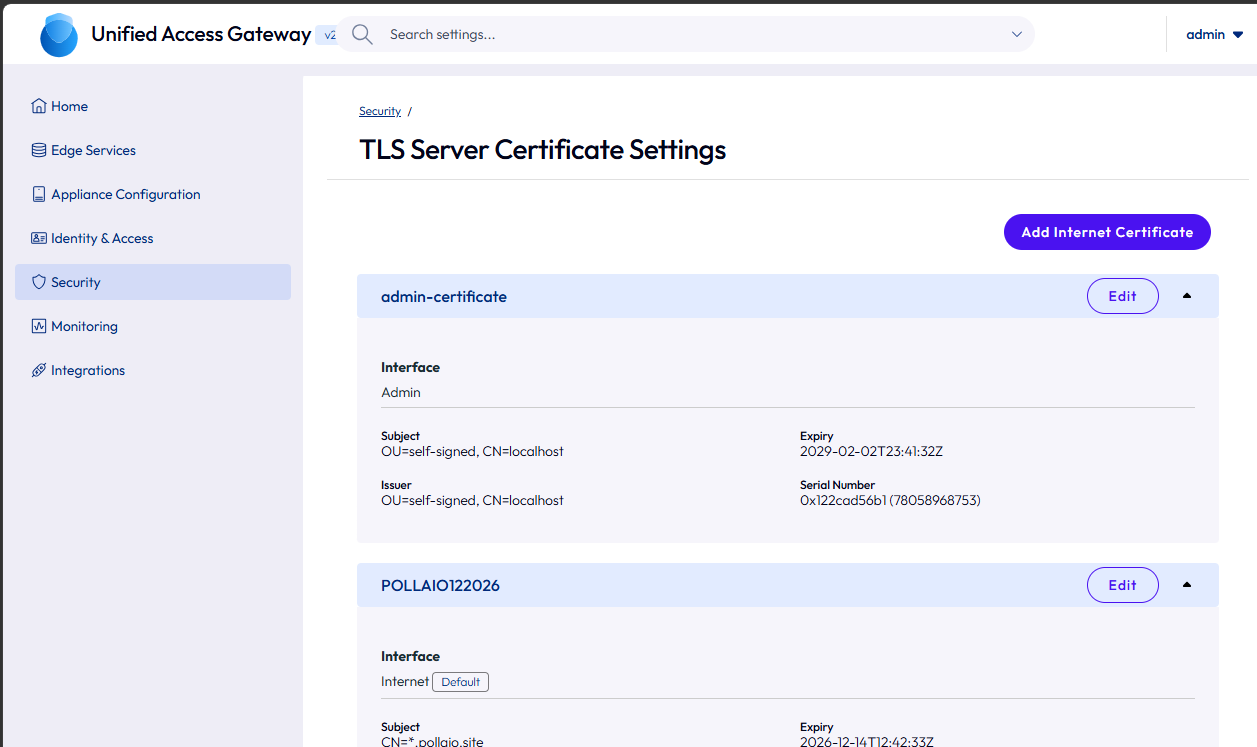
•TLS certificate replacement without restart: existing sessions stay connected while new sessions use the updated certificate. Caveat: if a network interruption occurs after renewal, automatic reconnect can fail because Horizon Client still expects the old certificate; the user reconnects by selecting the desktop or app again.
•ECC certificates and ECDSA cypher suites, in addition to RSA certificates.
•Multiple signing certificates in IdP metadata: all of them are considered for SAML authentication at Admin UI login (useful during IdP certificate rollover).
•Dedicated SAML signing certificate: the SAML signing certificate can be separated from the TLS one; the previous behaviour remains supported.

TLS Server Certificate Settings: uploading a new certificate while a Horizon session stays connected. This is a video where I try it 


.

Deployment on KVM and Nutanix AHV

•Native QCOW2 image: no more manual image conversion for KVM-based hypervisors. Nutanix AHV is qualified on this image.
•Starting with 2606, Nutanix is no longer listed on the vSphere/AWS/Google Cloud OVA: AHV customers must switch to the QCOW2 artefact at their next deployment or upgrade.

Content Gateway

No new features: security and stability updates only.

What’s new in 2609 (October 2026)

2609 is the most visible release for administrators: a new console, stricter client certificate checks and two CVEs closed.

Redesigned Admin UI

•Navigation and search: a new layout with cross-category search to find any setting quickly.
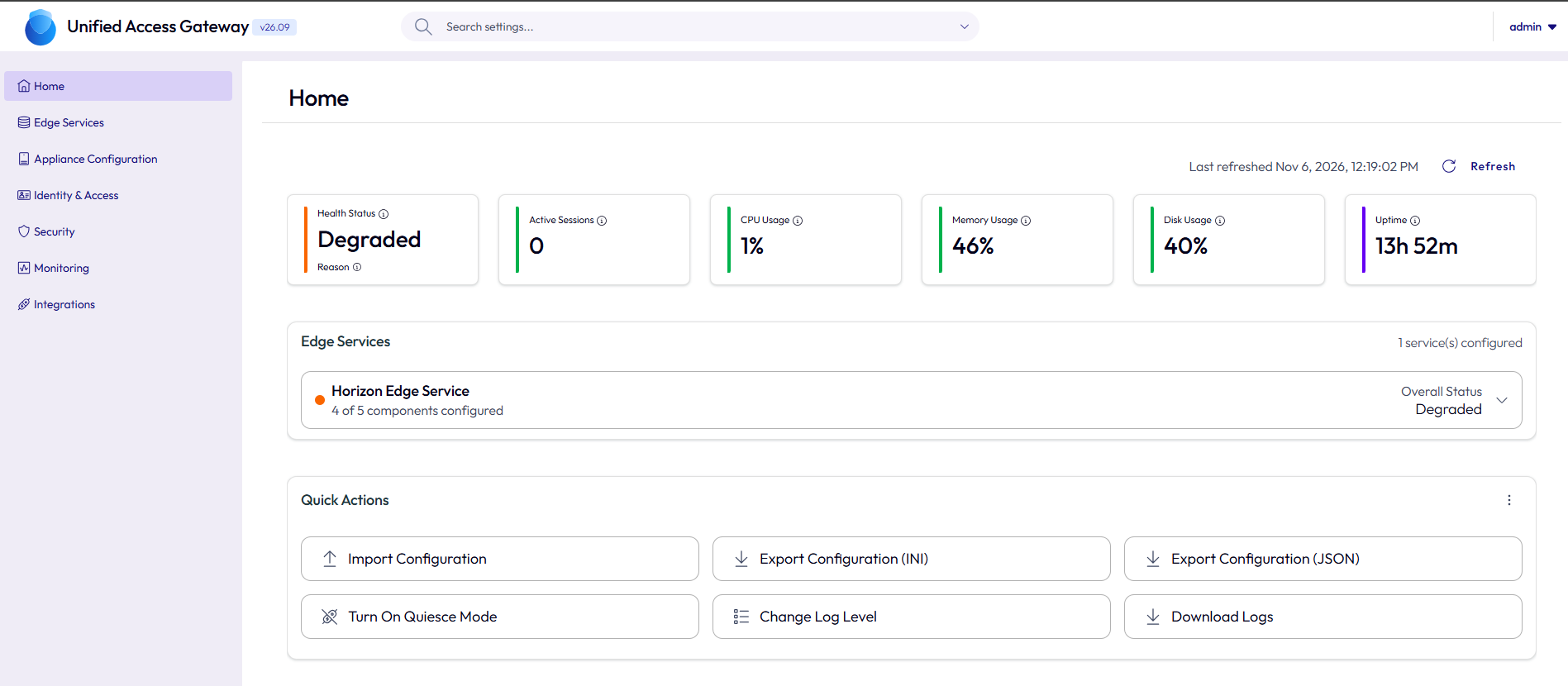
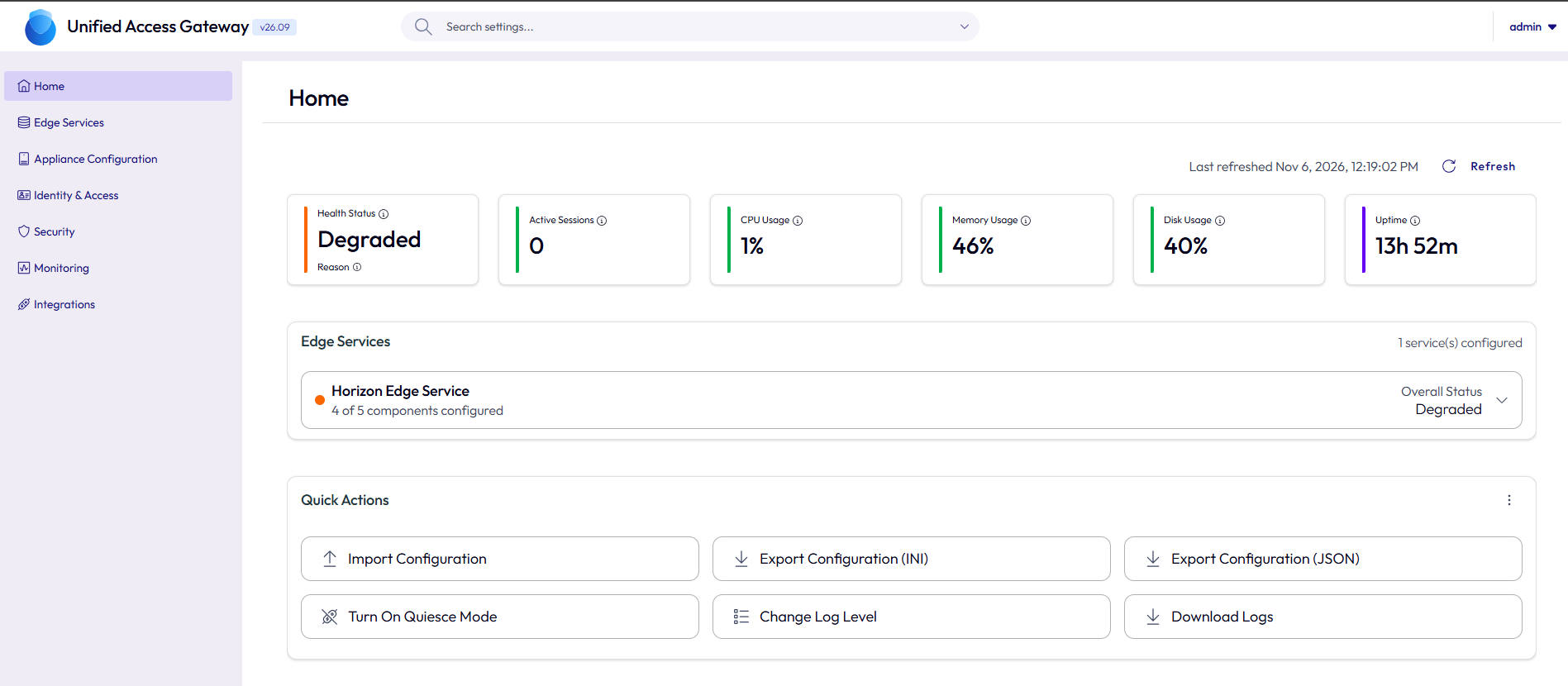
•Refreshed dashboard: edge service health and appliance resource usage at a glance, with shortcuts to common tasks.
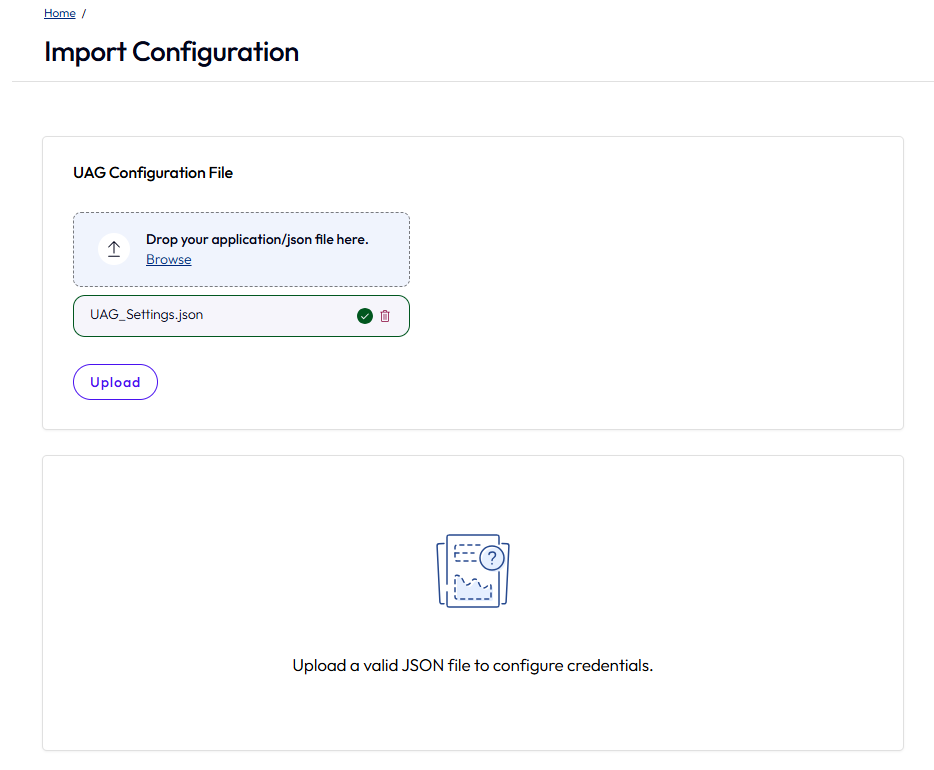
•Guided JSON import: validation and preview of the configuration before it is applied, reducing configuration errors.

[Screenshot 3] New UAG 2609 dashboard (edge service health and resources).
[Screenshot 4] Search bar in the new Admin UI while looking up a setting (e.g. “syslog” or “certificate”).
[Screenshot 5] Importing a JSON file, showing the preview/validation screen.
Authentication

•Enable Strict Certificate Validation: a new flag for X.509 authentication that adds checks on Extended Key Usage, Critical extensions and a stricter validity check during CRL/OCSP validation. Useful in smart card / PIV environments.

Horizon

•UAG on Red Hat OpenShift (Limited Availability): as part of Horizon 8 support for OpenShift, UAG can be deployed on OpenShift via PowerShell.
•Custom executables up to 500 MB (previously 200 MB): larger packages, such as clients or compliance agents, can now be distributed.

Other

•Logging and troubleshooting improvements.
•OS and Java security updates (details in the next section).

Security: what moving to 2609 fixes

UAG sits in the DMZ and is exposed to the Internet; that is the main reason not to fall behind. Since 2412, automatic OS patch updates are not available, so the only way to receive OS and Java fixes is to install the new release.

Version

Security change

2609

Addressed the eMudhra (CA) key compromise issue

2609

Resolved CVE-2026-91403 and CVE-2026-114406 through OS and Java updates

2606

Fixed UAG-13396: stack trace disclosure from an API under certain conditions (a known issue in 2603)

2606

OS upgraded from AlmaLinux 9.2 to 9.6 with its packages

2606 and 2609

Updated OS packages and Java components

Bugs fixed between 2603 and 2609

Moving to 2609 resolves 10 documented issues, including all four known issues of 2603. 2609 has no declared known issues.

ID

Fixed in

Issue

Known issue in 2603

UAG-13728

2609

rootSessionIdleTimeoutSeconds did not extend the Idle Shell Timeout

No

PPAT-21429

2609

Syslog over TCP failed when sent directly from the Tunnel service

Yes

PPAT-22611

2609

Syslog access logs had corrupted remote_host_ip / remote_host_port values for TCP tunnel flows (logging only, traffic not affected)

No

PPAT-22748

2609

Tunnel Server deadlock, with possible service disruption, when a DTR policy refresh coincided with active sessions

No

PPAT-22168

2606

Tunnel logs are no longer sent to stdout and stderr

No

PPAT-21439

2606

A DTR rule with a non-matching protocol (e.g. UDP:*) stopped evaluation of the other domains in the same rank

No

AST-25524

2606

“Settings imported partially” error when re-importing a just-exported JSON

Yes

UAG-13396

2606

Stack trace disclosure from an API

Yes

UAG-13133

2606

Incorrect health status after rapid configuration changes

No

UAG-13953

2606

False-positive CONFIG_CHANGE audit log entries when reading the SAML configuration via API

Yes

.

Before upgrading: 2609 behavior changes

2609 introduces stricter checks that, depending on your configuration, can block connections that worked on 2603. Omnissa provides a pre-upgrade checklist in KB 6001863: read it before you proceed.

Change

What to check

Risk if ignored

Host header allow list

The Host header of every request must match the configured allow list

Requests rejected with HTTP 400

CA thumbprint for outbound connections

Backend servers (Connection Server, etc.) must present a complete chain ending at the configured CA

Failed connections to backends

IdP SAML metadata

Metadata must include the leaf certificate the IdP uses to sign assertions

Failed SAML logins

Extended Server Certificate Validation

Better RFC conformance; applies only if enabled (disabled by default)

Certificate validation errors

SNMP v1/v2c

JSON import and PowerShell deployment prompt for the community name; if blank, “public” is used

Unintended community name

.

Minimum checklist:

☐Export the 2603 JSON configuration and keep a copy
☐Read KB 6001863 and mark which items apply to your environment
☐Check the Host header allow list and backend certificate chains
☐Verify the IdP metadata includes the leaf signing certificate
☐If you use SNMP v1/v2c, set the community’s name
☐If you run Nutanix AHV, download the QCOW2 image instead of the OVA

Recommended upgrade procedure

UAG is not upgraded in place: you deploy a new 2609 appliance and apply the old configuration to it. With two or more UAGs behind a load balancer, work one node at a time with no downtime.

1.Check compatibility with your Horizon / Workspace ONE version on the Omnissa Interoperability Matrix.
2.Download the 2609 files from Customer Connect: OVA for vSphere, QCOW2 for KVM/Nutanix AHV, VHDX for Hyper-V, plus the PowerShell scripts if you use them.
3.Export the configuration of 2603 as JSON (and save certificates and keys if they are not already in the JSON).
4.Remove the node from the load balancer (or quiesce it) and wait for sessions to drain.
5.Deploy the new appliance with the same IP/hostname, via the OVF wizard or PowerShell (uagdeploy.ps1 with the updated .ini file).
6.Import the JSON from the new Admin UI, using preview and validation to check what will be applied.
7.Verify the dashboard, edge service status, test logins (Horizon, SAML/RADIUS/certificate) and syslog.
8.Put the node back in the load balancer and repeat on the other nodes.

Summary

Going from 2603 to 2609 brings a newer operating system, two CVEs closed, ten bugs fixed (including every 2603 known issue), certificate replacement without downtime and a much better console. The only real preparation concerns the new checks on Host header, certificate chains and SAML metadata: once those are verified, the upgrade is a routine appliance swap.

Unified Access Gateway 2609: Why Upgrade from 2603

Horizon – Agent Update – Unable to see the last version

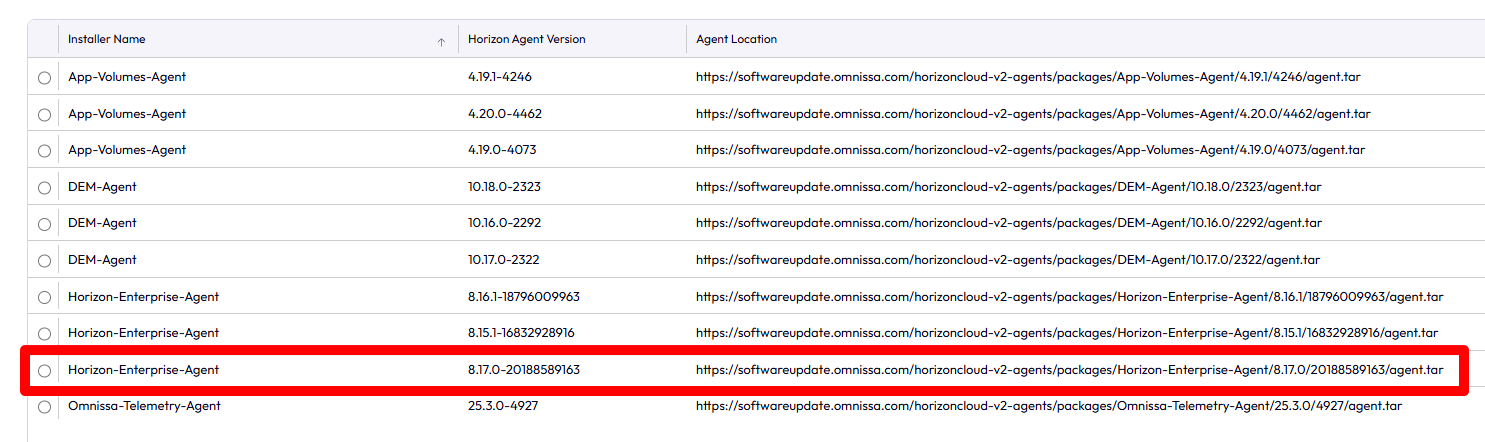
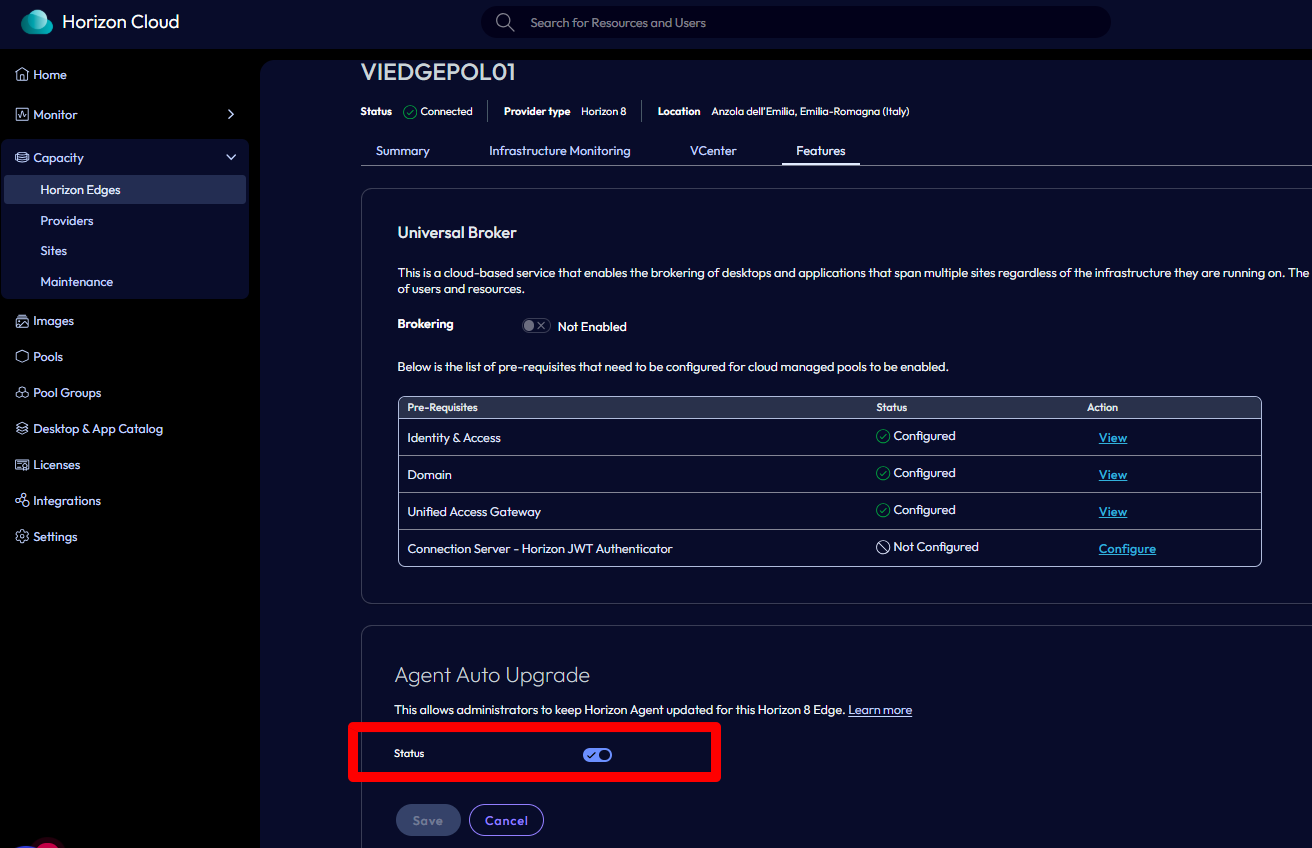
After updating Horizon to version 2512, I noticed that the latest versions (8.17) weren’t being displayed in the Agent Updates section.


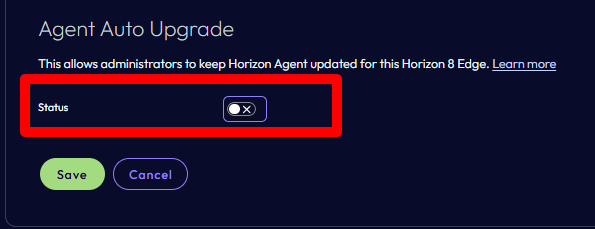
To see the latest versions, I had to disable the Agent Update service on the Omnissa Connect side. Simply go to the Capacity section, select the relevant edge gateway,

and disable the specific option in the Features section.


Re-enable it after a few minutes.

After a few minutes, the latest versions also appeared in the Horizon console.

Horizon – Agent Update – Unable to see the last version

VMware vSAN 7 Update 3 New Features

VMware vSAN 7 Update 3 New Features

With the release of VMware vSphere 7 Update 3, this also means there is a new version of vSAN as well. VMware vSAN has been trailblazing in the world of HCI for several years now and with over 30,000 customers and many releases behind it, the solution has certainly grown, matured, and become […]


VMware Social Media Advocacy

VMware vSAN 7 Update 3 New Features

Upgrade Standalone ESXi 7.0 to 7.0b

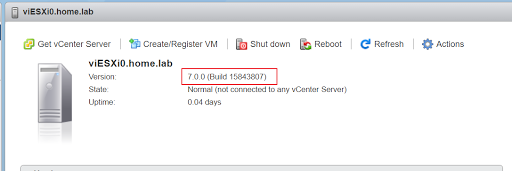
 Check ESXi version:

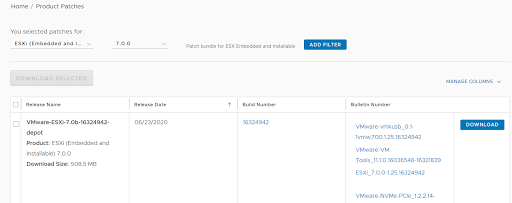
Check on https://my.vmware.com/group/vmware/patch if there are new patches

There is a new patch (7.0b), download it

After download upload file to ESXi host

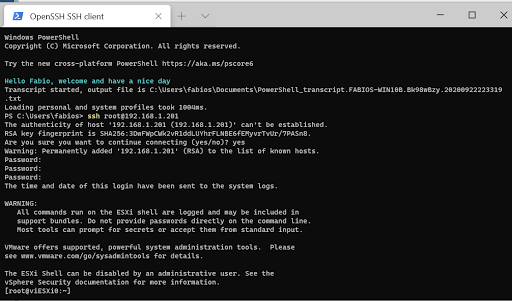
Create a SSH connection to ESXi Host

Put in maintenance mode

esxcli system maintenanceMode set --enable true

Update Host 

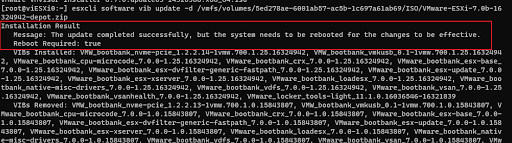
esxcli software vib update -d /vmfs/volumes/5ed278ae-6001ab57-ac5b-1c697a61ab69/ISO/VMware-ESXi-7.0b-16324942-depot.zip

and finally

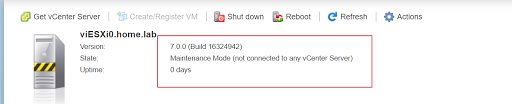
After reboot the version is:
exit to maintenance mode….
#####

or update from internet

esxcli software profile update -p ESXi-7.0b-16324942-standard -d https://hostupdate.vmware.com/software/VUM/PRODUCTION/main/vmw-depot-index.xml

Upgrade Standalone ESXi 7.0 to 7.0b

AKS – Aggiornamento in arrivo a inzio Luglio

Come ogni 3 Mesi sono in arrivo degli aggiornamenti per il servio AKS (Azure Kubernetes Services):

  • Nuova versione la 1.17  disponibile dal 1 Luglio (Sempre da quella data non saranno più in supporto le versioni 1.14)
  • L’annuncio che a breve verranno rilasciati i nodi AKS con ubuntu 18.04 (Una volta rilasciata la nuova versione dei nodi tutti i successivi aggiornamenti di AKS si porteranno dietro anche l’aggiornamento di versione di Ubuntu)
Tutti i dettagli in questo link
AKS – Aggiornamento in arrivo a inzio Luglio

Aggiornamento dinamico dei record DNS da infrastruttura DHCP

Nelle opzioni dello scope del DHCP abbiamo:

In questa configurazione abbiamo:
  • gli aggiornamenti dinamici abilitati 
  • solamente se richiesto dal client DHCP

Come faccio vedere se questo aggiornamento è configurato sui client windows? 

Lo verifico dalle proprietà del TCP/IP sotto la voce DNS
Può succedere che alcuni dispositivi, configurati per ricevere un indirizzo ip dinamico, non aggiorni i dati sul DNS server. Ad esempio a me è capitato con dei terminali wyse.
In questo caso si può abilitare la voce:
“Always dynamically update DNS A and PTR records”
#######
As for the differences between “Always dynamically update DNS records” and “Dynamically update DNS records for DHCP clients that do not request updates”, you may check the following explanation:
1) By default, clients will register A records on DNS server directly and request DHCP server to register PTR record for them;
2) When enabling “Always dynamically update DNS records“, DHCP server will register both A record and PTR record on behalf of client, although client may only ask DHCP server to register PTR record;
3) “Dynamically update DNS records for DHCP clients that do not request updates” need to be checked when you are in a mixed environment (MAC and Linux clients, or NT 4.0 clients), these clients may be unable to send request to DHCP server to let DHCP server register records, after checking this option, then DHCP server will also register records for them (both A and PTR records).
#######
I motivi o gli eventi seguenti possono attivare un aggiornamento dinamico:

  • Aggiunta, rimozione o modifica degli indirizzi IP nella configurazione delle proprietà TCP/IP relativa a una qualsiasi delle connessioni di rete installate.
  • Lease dell’indirizzo IP che modifica o rinnova una qualsiasi delle connessioni di rete installate con il server DHCP, ad esempio quando si avvia un computer o dopo l’utilizzo del comando ipconfig /renew.
  • Utilizzo del comando ipconfig /registerdns, che impone manualmente un aggiornamento della registrazione del nome del client in DNS.
Aggiornamento dinamico dei record DNS da infrastruttura DHCP