Migrating Horizon from VMware to Omnissa: Why a Parallel Connection Server Deployment Is Often the Safest Approach

The transition from VMware Horizon to Omnissa Horizon introduced more than just a branding change. Starting with Horizon 2412 and continuing with later releases such as 2503 and 2506, several architectural and configuration elements have been modified.

These changes include licensing format updates, ADAM/AD LDS database modifications, registry key renaming, folder restructuring, and updated group policy templates.

While the official upgrade path works, in many environments a parallel deployment strategy can significantly reduce risk and allow end users to validate the new platform before switching production workloads.

This article outlines the key changes introduced by Omnissa and explains why building a new Horizon pod alongside the existing one can be a practical migration strategy.

.

Key Changes Introduced with Omnissa Horizon

1. New Licensing Model

Beginning with Horizon 2412, Omnissa introduced a new licensing mechanism and licensing portal.

During the transition phase, both VMware and Omnissa license keys are temporarily accepted, but this compatibility window is limited. Later releases, such as 2503.1 ESB and 250,6 rely entirely on the Omnissa License Module (OLM).

If a valid Omnissa license key is not installed after upgrading, the Horizon Console may enter a restricted or degraded mode.

Relevant KB and documentation references include:

• KB 6000212 – Horizon licensing transition guidance
• KB 6000745 – Omnissa rebranding changes and affected components

.

2. ADAM / AD LDS Database Changes

One of the most important backend changes affects the Horizon LDAP (ADAM/AD LDS) database.

Historically, Horizon used application partitions referencing the VMware namespace.
With the Omnissa rebranding, new environments now use the
horizon namespace.

Example:

Old partition naming:

dc=vdi,dc=vmware,dc=int

dc=vdiglobal,dc=vmware,dc=int

New partition naming:

dc=vdi,dc=horizon,dc=internal

dc=vdiglobal,dc=horizon,dc=internal

Omnissa provides a migration script to update the partition names after upgrading all pods to newer versions, such as 2503.

Relevant documentation:

• KB 6000797 – ADLDS partition migration for Horizon

.

3. Registry Key and File System Changes

The rebranding also impacted multiple components of the Horizon installation:

Component

Previous Location

New Location

Installation folder

C:\Program Files\VMware\VMware View

C:\Program Files\Omnissa\Horizon

Logs

C:\ProgramData\VMware\VDM\logs

C:\ProgramData\Omnissa\Horizon\logs

Registry keys

HKLM\Software\VMware, Inc.\VMware VDM

HKLM\Software\Omnissa\Horizon

ADAM DB instance

VMwareVDMDS

OmnissaHzeDS

Because registry paths changed, Group Policy templates (ADMX) were also updated and must be replaced during upgrades.

Failure to update the ADMX files can lead to policies silently no longer applying.

.

Why a Parallel Horizon Deployment Can Be a Better Migration Strategy

Although a direct upgrade of the Connection Servers is supported, the number of changes introduced with the Omnissa transition makes a greenfield-style deployment attractive.

Instead of upgrading the existing servers, consider deploying new Connection Servers alongside the current environment.

Advantages include:

1. Opportunity to Upgrade Windows Server

New Connection Servers allow administrators to deploy a modern operating system, such as:

• Windows Server 2022 or later (Windows 2025 is a like option)

This avoids performing multiple upgrades on the same system.

.

2. User Acceptance Testing

With a parallel deployment, you can:

• publish test desktop pools
• provide pilot users access
• validate authentication flows
• verify DEM and App Volumes integration

Users can test the environment before the production switch.

.

3. Reduced Upgrade Risk

Upgrading in place modifies:

• ADAM database
• registry keys
• services
• folder paths

A clean installation avoids potential issues caused by legacy configurations.

.

Example Parallel Migration Architecture

A typical migration architecture might look like this:

Existing Environment

• Horizon Connection Servers
• Unified Access Gateways
• Instant Clone pools
• DEM and App Volumes

New Environment

• New Omnissa Connection Servers
• New Omnissa Unified Access Gateways
• Same vCenter Server
• Same Active Directory
• Same desktop images
• Same DEM*
• Same App Volumes*

*After migration, it will be upgraded.

This allows a staged migration.

Key points:

• vCenter Server can remain unchanged
• Desktop pools can be recreated or migrated
• User profiles continue to work through DEM

.

Migrating Instant Clone Desktop Pools

In environments heavily using Instant Clones, rebuilding pools manually can be time-consuming.

Automation scripts can accelerate the process by exporting and recreating pools through the Horizon APIs.

In my environment, I use a PowerShell-based migration script that reads the configuration of Instant Clone pools and recreates them on the new pod.

This allows administrators to migrate:

• pool configuration
• entitlements
• naming patterns
• provisioning settings

with minimal manual effort.

This is the link to the script

OMNISSA/OMNISSA – Export and Import Desktop and Entitlements v7.ps1 at main · fabio1975/OMNISSA

.

Reusing DEM and App Volumes

Existing deployments of

• Omnissa Dynamic Environment Manager
• Omnissa App Volumes

can usually remain unchanged during migration.

However, compatibility must always be validated using the official interoperability matrix.

Relevant documentation:

• Horizon interoperability matrix
• App Volumes compatibility with Horizon
• DEM compatibility with Horizon

Official documentation:

These matrices confirm supported combinations between:

• Horizon versions
• App Volumes
• Dynamic Environment Manager
• vCenter Server
• ESXi

.

Suggested Migration Workflow

A practical migration process could look like this:

    1. Deploy new Connection Servers with Omnissa Horizon
    2. Deploy new Unified Access Gateways
    3. Connect the new pod to the existing vCenter
    4. Validate App Volumes and DEM compatibility
    5. Recreate or migrate Instant Clone pools
    6. Perform pilot user testing
    7. Switch production access
    8. Decommission legacy Connection Servers
    9. Create the news GPO for Horizon (we need use the new GPO Templates)
    10. Upgrade the Horizon Agent, DEM and App Volumes

    .

    Final Thoughts

    The transition from VMware Horizon to Omnissa Horizon introduces several structural changes that go beyond simple branding.

    Changes in licensing, LDAP partitions, registry paths, and policy templates can complicate traditional upgrade workflows.

    For many environments, especially large VDI deployments, deploying new Connection Servers in parallel offers a safer and more flexible migration strategy.

    It provides an opportunity to modernize the infrastructure, validate compatibility with components such as App Volumes and DEM, and allow users to test the platform before the final cutover.


    .

    .

    Migrating Horizon from VMware to Omnissa: Why a Parallel Connection Server Deployment Is Often the Safest Approach

    Omnissa App Volumes 2406 – Select from multiple packages to launch

    The App Volumes  2406 has many new functions, we can read all the info about this version in the following link:

    Omnissa App Volumes Release Notes

    I want to write about this:

    To use this new function it is necessary to:

    • upgrade App Volumes Managers to 2406

    App Volumes Manager Upgrade

    • upgrade App Volumes Agent to 2406

    App Volumes Agent Upgrade

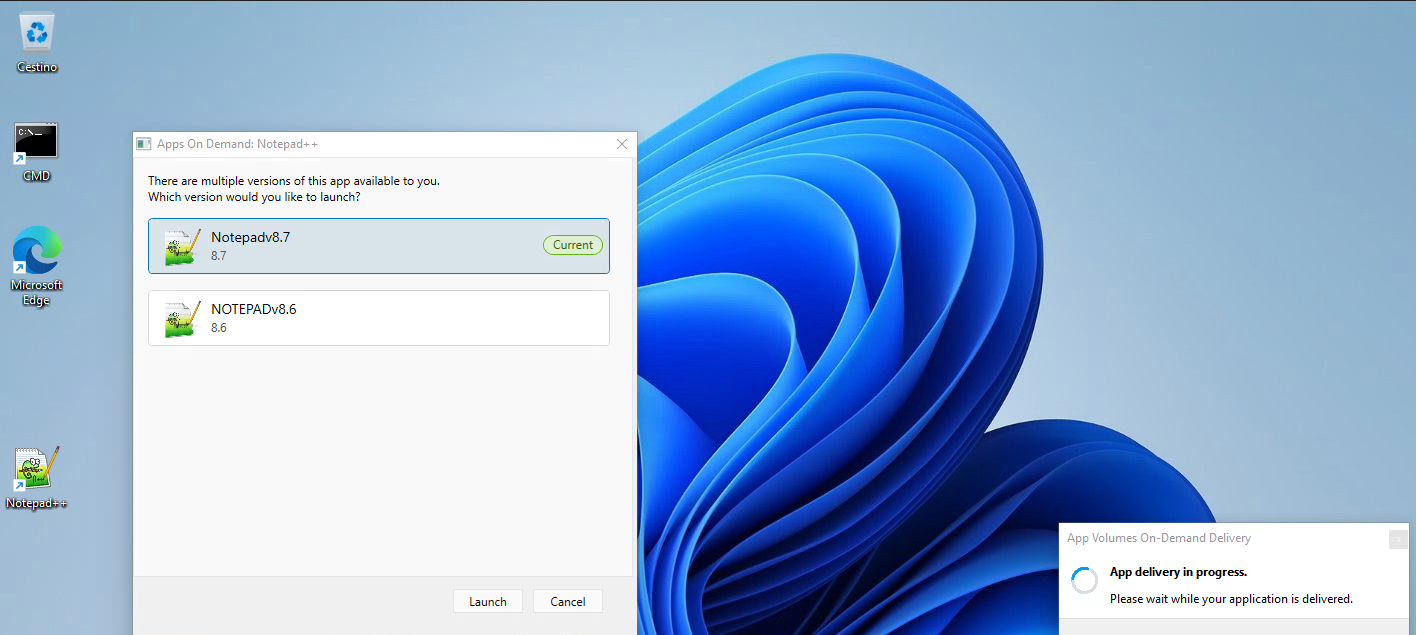
    Now in the new App volumes Manager version, when I assign to the user a news package, I can select:

    A screenshot of a computer

Description automatically generated

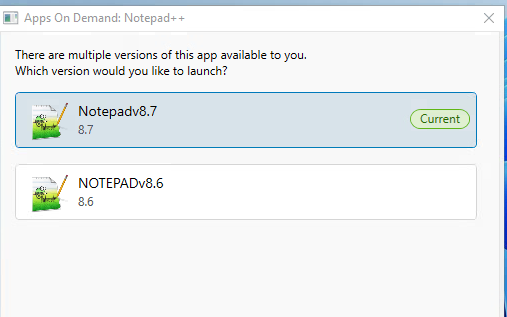
    Now when the user “Fabio Storni” tries to start Notepad appstack from her VDI, he can select which Notepad version wants to start….

    A screenshot of a computer screen

Description automatically generated

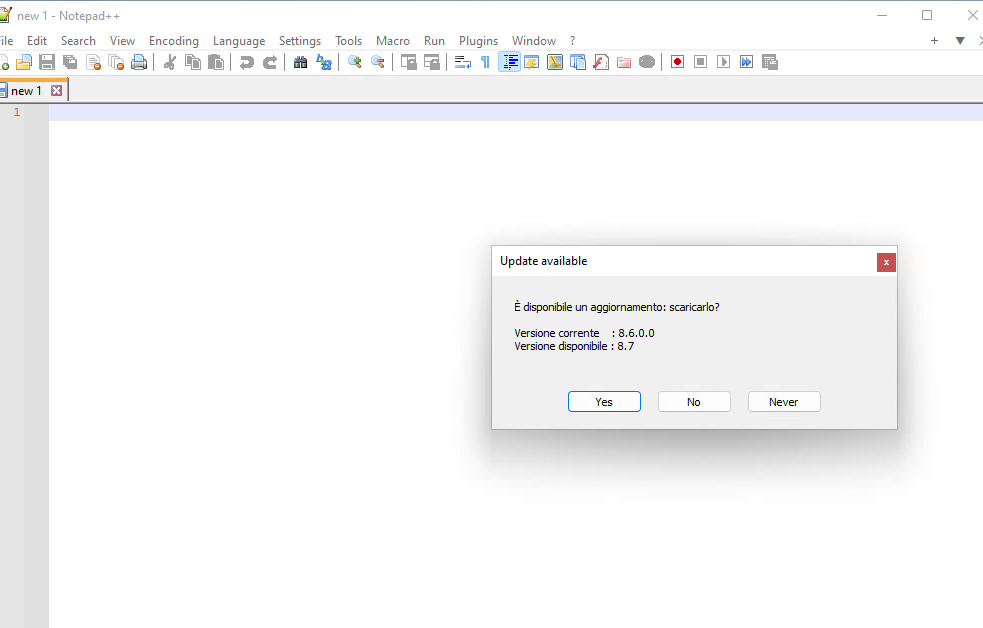
    And I can select the application version to launch, in this case, I select the not current version

    A screenshot of a computer

Description automatically generated

    A screenshot of a computer

Description automatically generated

    Omnissa App Volumes 2406 – Select from multiple packages to launch

    App Volumes 2406

    As anticipated in my previous posts, version 2406 of Omnissa’s EUC products (the company that took over VMware’s EUC products) has been released. New versions of the following are present:

    • App Volumes
    • Horizon
    • Unified Access Gateway
    • Dynamic Environment Manager

    In the next posts I present some of the most interesting new features that are present in these new releases.

    Let’s start with App Volumes and talk about:

    • Volumes App for Persistent Desktop
    • Extending the App Volumes solution to other platforms
    • Assign different versions of the same application to a user

    Volumes App for Persistent Desktop

    • The solution until the version before 2406 was only available for non-persistent desktops (Instant Clone)
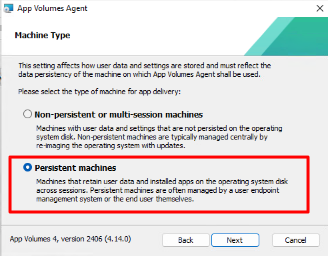
    • From the 2406 it is also possible to use it with persistent desktops

    The main difference is present in the installation of the agent where it is asked on which type of desktop we are installing the App Volumes agent

    A screenshot of a computer

Description automatically generated

    In its nature of profile management, the use of App Volumes on a persistent machine is only possible with App Stacks and not with Writable Volumes

    Extending the App Volumes solution to other platforms

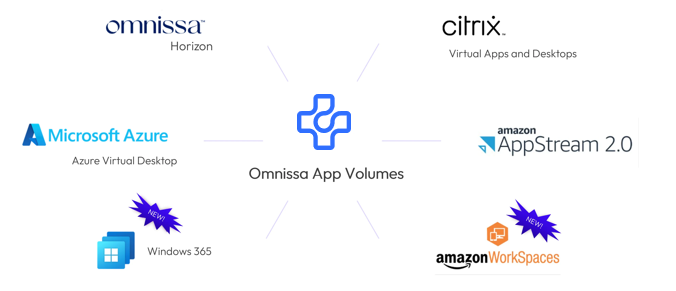
    The ability to use App Volumes with VDI is not only of Horizon infrastructure, from version 2406 it is possible to use with Windows 365 and with Amazon WorkSpaces

    A group of logos on a white background

Description automatically generated

    Assign different versions of the same application to a user

    Leveraging Apps on Demand, end users can now select from multiple packages of an application at launch, providing flexibility to try out new versions or launch specific ones

    Other assignment options: “Marker,” and “Package,”, now we are the “Multiple,” option enhancing application management and deployment flexibility.

    App Volumes 2406

    VMware Horizon takes a long time to provision Desktop virtual machines

    VMware Horizon takes a long time to provision the Desktop virtual machines

    We detected a strange situation when changing the sizing (number of desktop VMs) or publishing a new image on the Instant clone Desktop Pool.

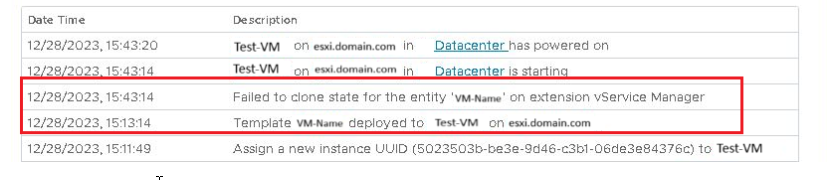
    The highlighted situation is a very long time in creating one or more VMs from the Gold Image. Following investigation we found that the problem is also present when cloning a VM that is present in the same vSphere environment where the instant clone VDIs are allocated.

    In our case it was a vSAN environment, having carried out the first routine checks where no network, disk or compatibility problems were found, we went into the details of the logs and in the case of the clone we found this error message in the logs of the VM that was being cloned.

    A screenshot of a computer

Description automatically generated

    We have found a workaround and a permanent resolution:

    Workaround:

    Restart the vCenter service

    VMware vService Manager

    Resolution:

    Check this KB https://kb.vmware.com/s/article/96049 where the problem is fixed on vCenter 8.0 U2b.

    VMware Horizon takes a long time to provision Desktop virtual machines

    Horizon 2312, new feature to simplify the Gold Image Linux Configuration

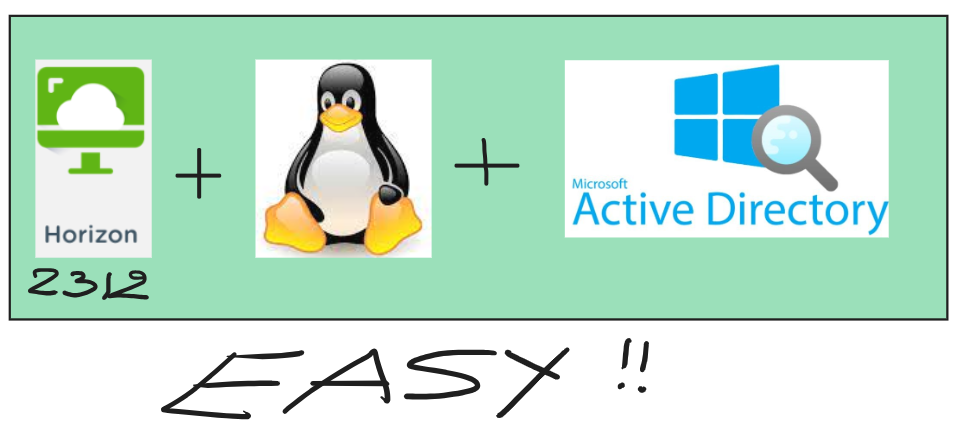
    A penguin and microsoft active logo

Description automatically generated

    Few people know that it is possible use Linux Distribution to create VDI desktop or Stream Application (Like RDS) to publish it with Horizon.

    The desktop pool can to be Instant Clone or Full Clone.

    In the last Horizon version (2312) there is a new functionality to configure the agent, the function have to objective to simplify the installation and also configure the OS ((Like the joined to Active Directory domain).

    In the Horizon Agent for Linux package there is a new command file:

    easyinstall_viewagent.sh

    We can use this command for:

    • Configure Linux OS template
    • Install Horizon Agent

    For complete all previous steps you can start this command (with root privileges)

    ./easyinstall_viewagent.sh

    The command do:

    Platform check

    A black screen with white text

Description automatically generated

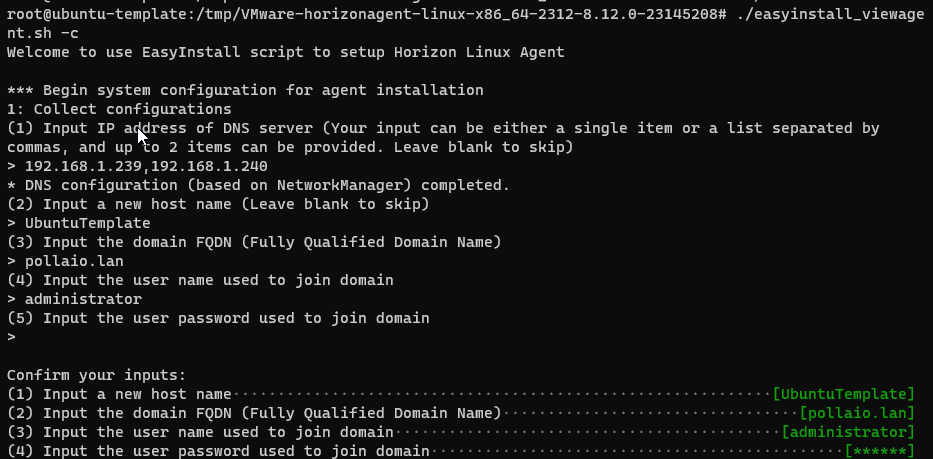
    Now you need to insert information like DNS, Hostname, Domain and Account to join to domain

    A screenshot of a computer

Description automatically generated

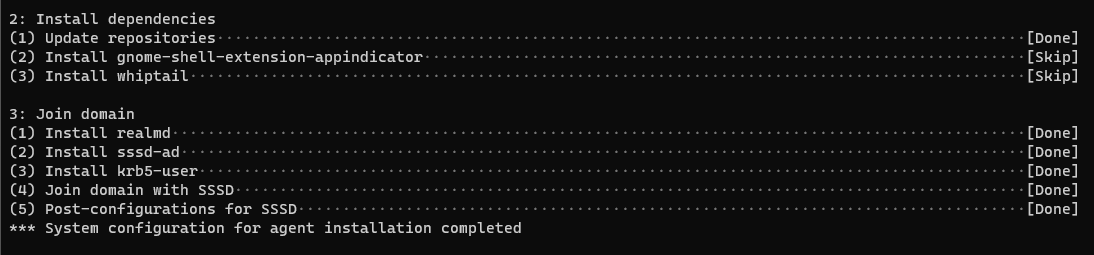
    Now the script check and install missed packages (SSSD etc.…) and make the domain join

    A screen shot of a black screen

Description automatically generated

    After joined the template to AD domain the script start to install the horizon agent

    A screenshot of a computer

Description automatically generated

    A black screen with white text

Description automatically generated

    Now the Linux GoldI mage is ready to use for create a Horizon instant clone desktop pool or used for Full Clone Desktop Pool.

    It is possible to configure the OS and install Horizon Agent in two different steps

    • Configure OS
      • For configure user Linux OS use this command:

    ./easyinstall_viewagent.sh -c

    • Install Agent
      • After configure the OS we can install the Horizon agent with this command:

    ./easyinstall_viewagent.sh -i

    With this command we can to use some switch value:

    Default (Hostname, Domain FQDN, DOMAIN Join User, DOMAIN Join PASSWORD …)

    Advanced (The same option of DEFAULT with NTP, HORIZON AGENT FEATURE and other)

    Expert (The same option of Advanced with another function)

    In this link more information

    Use the Easy Setup Tool to Prepare a Linux Machine (vmware.com)

    Horizon 2312, new feature to simplify the Gold Image Linux Configuration

    VMware Horizon 2312

    As usual, every 3 months VMware releases a new version of Horizon (and also of almost all EUC applications)
    The following have been available for a few days:
    Horizon 8 2312
    App Volumes 4 2312
    Dynamic Environment Manager 2312
    ThinApp 2312

    Among the various features released for Horizon 8, the most interesting one is Agent Auto Upgrade:

    “The agent auto upgrade feature allows customers to automatically initiate upgrades without manual intervention. To utilize this feature, on-premises systems must have access to CDS servers. Customers without CDS access can establish their webserver, host the agent components, and then register the agent build with the connection server to upgrade agents in VDI/RDSH desktops. This feature requires Horizon Plus or Horizon Universal License, and is available for Full Clone Desktops and RDSH Servers only. To upgrade Horizon Agent in Instant Clone Desktop Pools or RDS Farms, upgrade Horizon Agent on the Golden Image and schedule maintenance to push the new image.”

    VMware Horizon 2312

    VMware Horizon 8 2212

    VMware has just released a new version of Horizon 2212. These are some of the features/support introduced:

    • Horizon 8 version 2212 in conjunction with App Volumes 4 version 2212 introduces Horizon Published Apps on Demand.  With this new feature, administrators can use App Volumes applications directly in their instant-clone RDS farms.  Now applications can be delivered dynamically to a generic Windows OS as users launch them. This greatly simplifies static image management and gives administrators the ability to reduce their application specific farms. This also brings the Horizon and App Volumes administration consoles closer together, allowing Horizon administrators to add App Volumes Manager servers and entitle applications to users without the need for duplicate entitlements in App Volumes. This feature creates an opportunity to reduce the time-consuming management of application installations on RDS Farms, and enables scenarios such as multiple users being able to use different versions of the same application while logged in to the same RDS Server.
    • Microsoft MAK licenses are now supported with Instant Clones.
    • When you create an automated pool of full clone desktops, you can now specify an active directory OU in which computer accounts can be created. Previously, computer accounts would get created in the default OU and administrators would manually move them after pool creation. This feature, which already exists for Instant Clone desktop pools, addresses this pain point for administrators.
    • Cloud Pod Architecture is supported with IPv6 environments for more security and added address spaces.
    • Administrators can now generate a CSR configuration file, import a CA-signed certificate to Connection Server, and monitor health of the certificate from Horizon Console.

    More details here:

    VMware Horizon 8 2212 Release Notes

    VMware Horizon 8 2212

    Using Secondary Image on Instant Clone Desktop Pool (VMware Horizon)

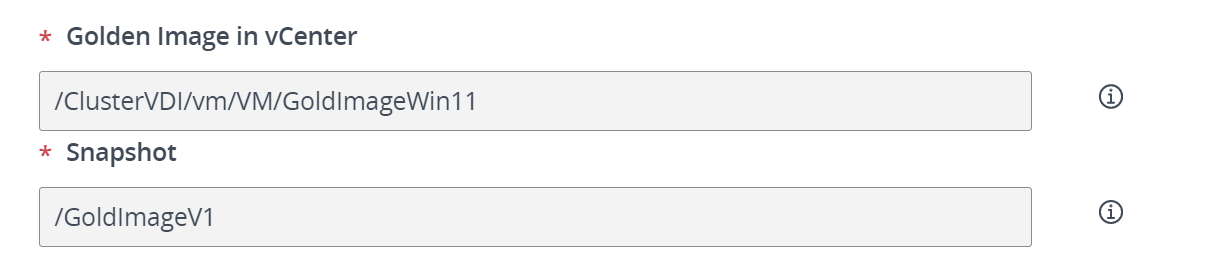
    In the management of a pool of Instant Clone (IC) VMs in a VMware Horizon infrastructure, one of the most useful aspects for a system administrator is the ability to make updates by modifying the GoldImage, subsequently generating a new Snapshot of it and applying it to all the VM ICs of the Pool.

    Since version 2111, we have the possibility to use a “second image” in the same Pool to allow the deployment of this second image in a “selective” way on only some VMs.

    This allows us to test the changes made only on a limited number of users.

    Let’s see how it works, in my Home Lab where I have a Pool of type IC with Guest OS Windows 11.

    The VMs (in this case there are 2) point to the following snapshot of the GoldImage:

    Immagine che contiene tavolo

Descrizione generata automaticamente

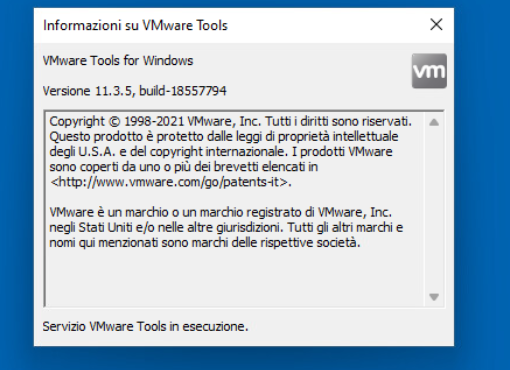
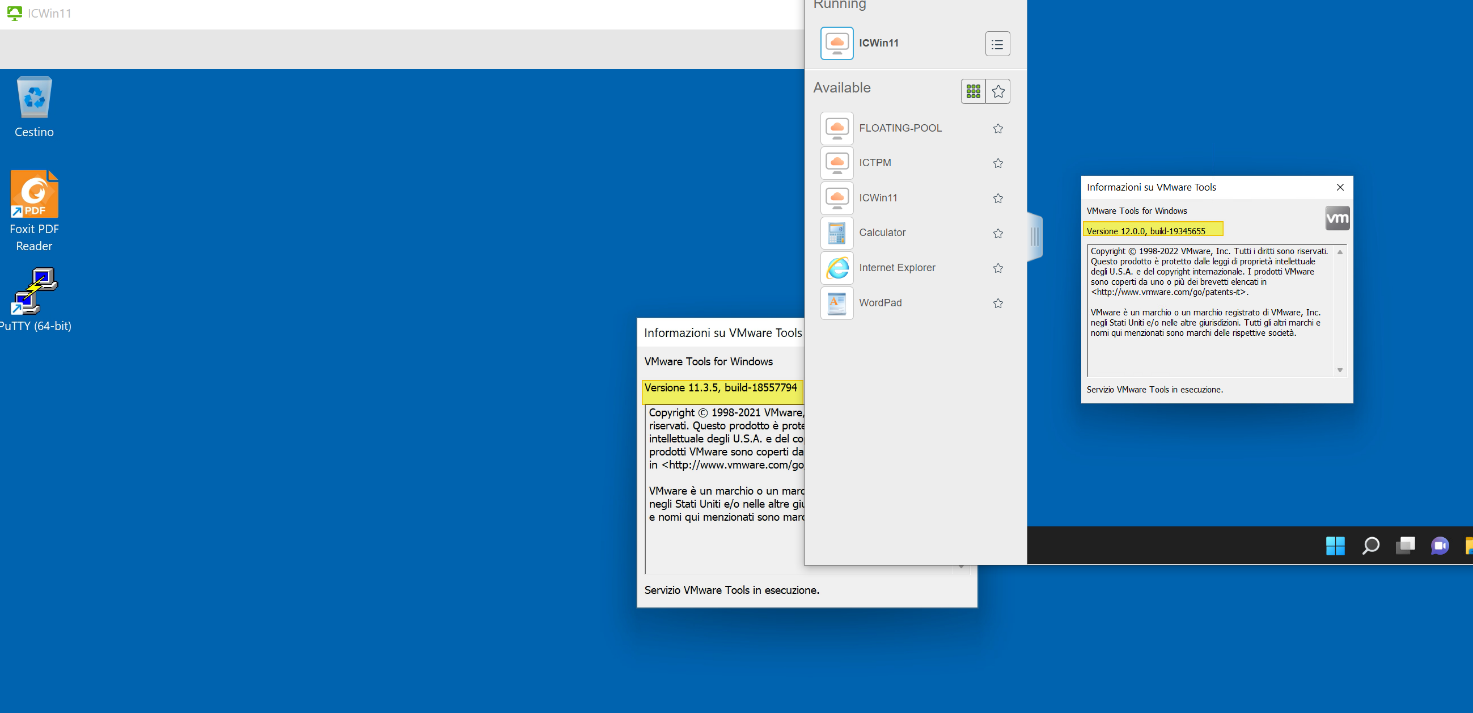
    Let’s proceed to update the VMware Tools on the Gold image, where the version is currently present

    Immagine che contiene testo

Descrizione generata automaticamente

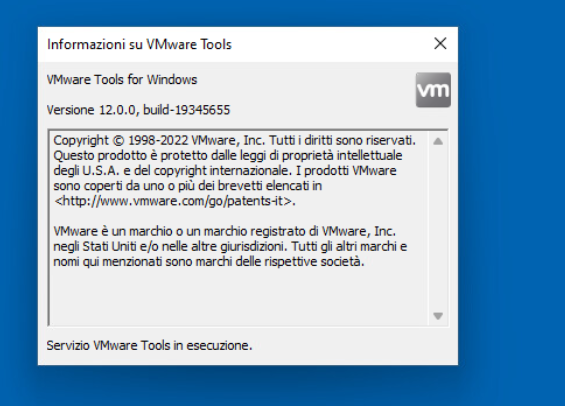
    Post update we have the following version

    Immagine che contiene testo

Descrizione generata automaticamente

    We proceed with turning off the GoldImage and create the snapshot to use.

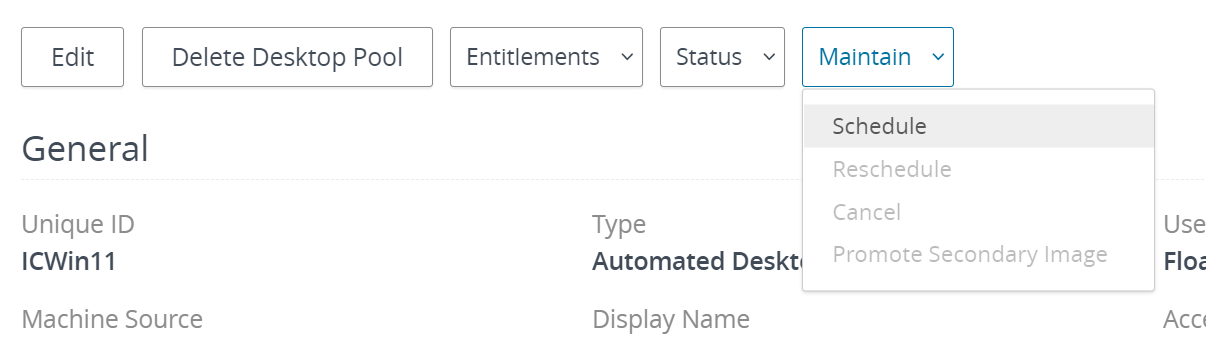
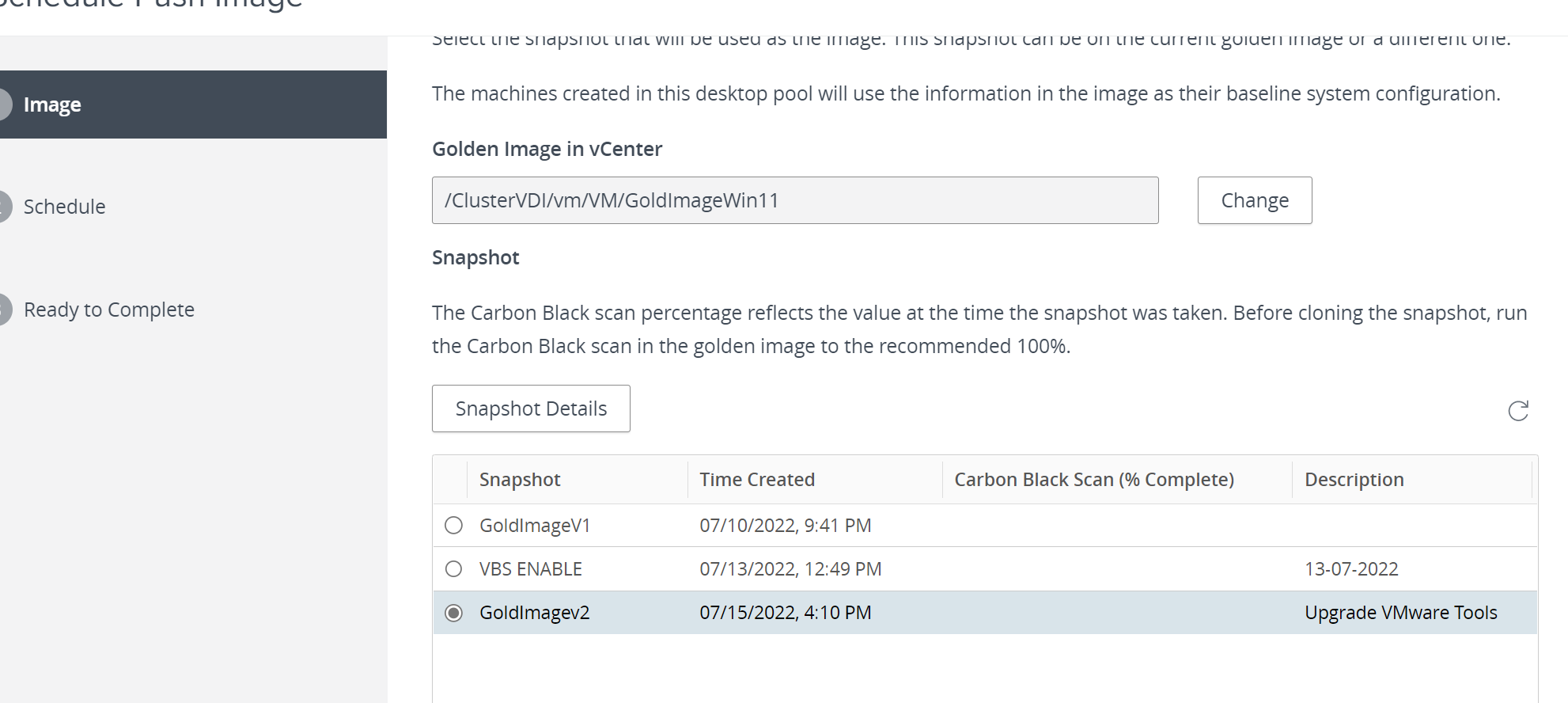
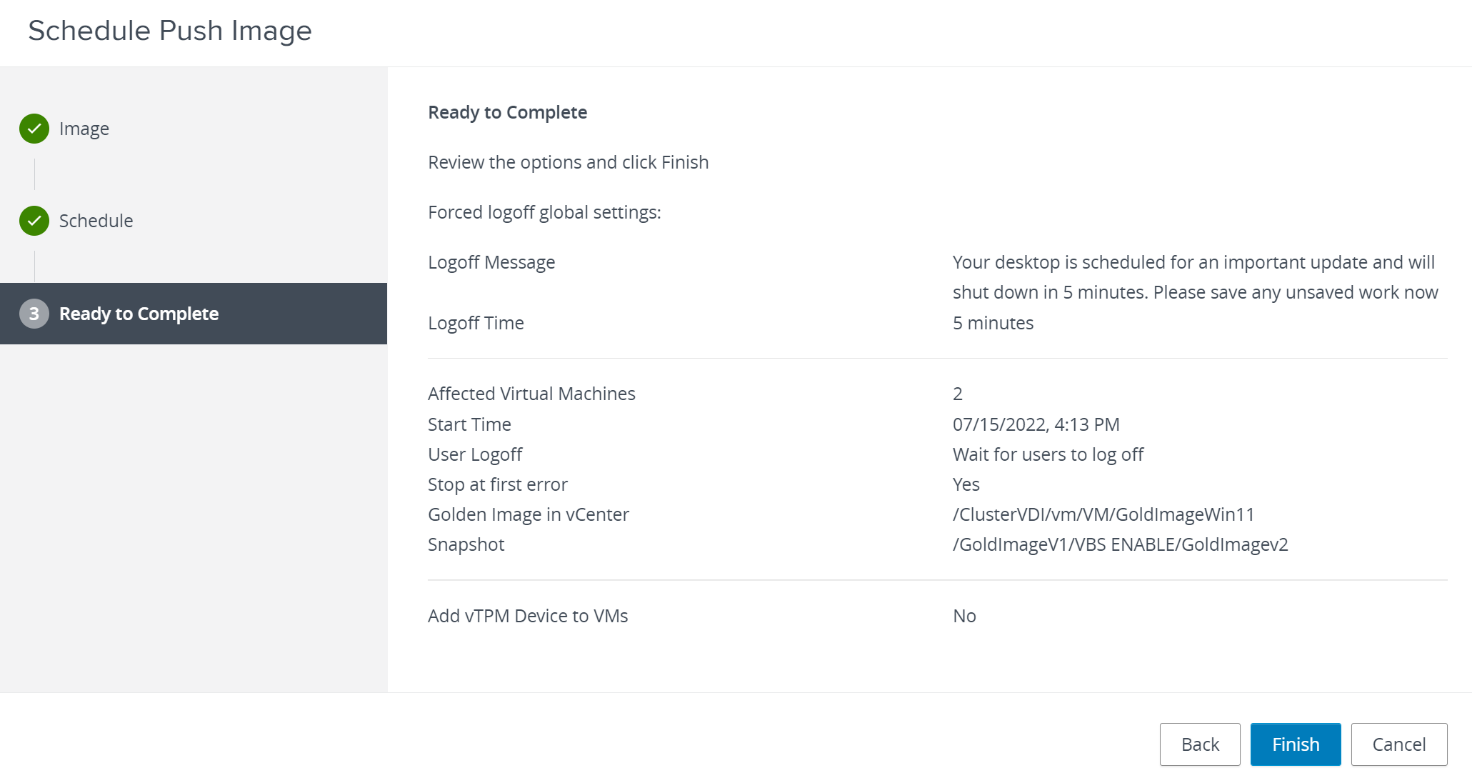
    Once the snapshot is created, we go to the Desktop Pool and proceed to assign the snapshot created as a secondary image.

    Immagine che contiene tavolo

Descrizione generata automaticamente

    Immagine che contiene testo

Descrizione generata automaticamente

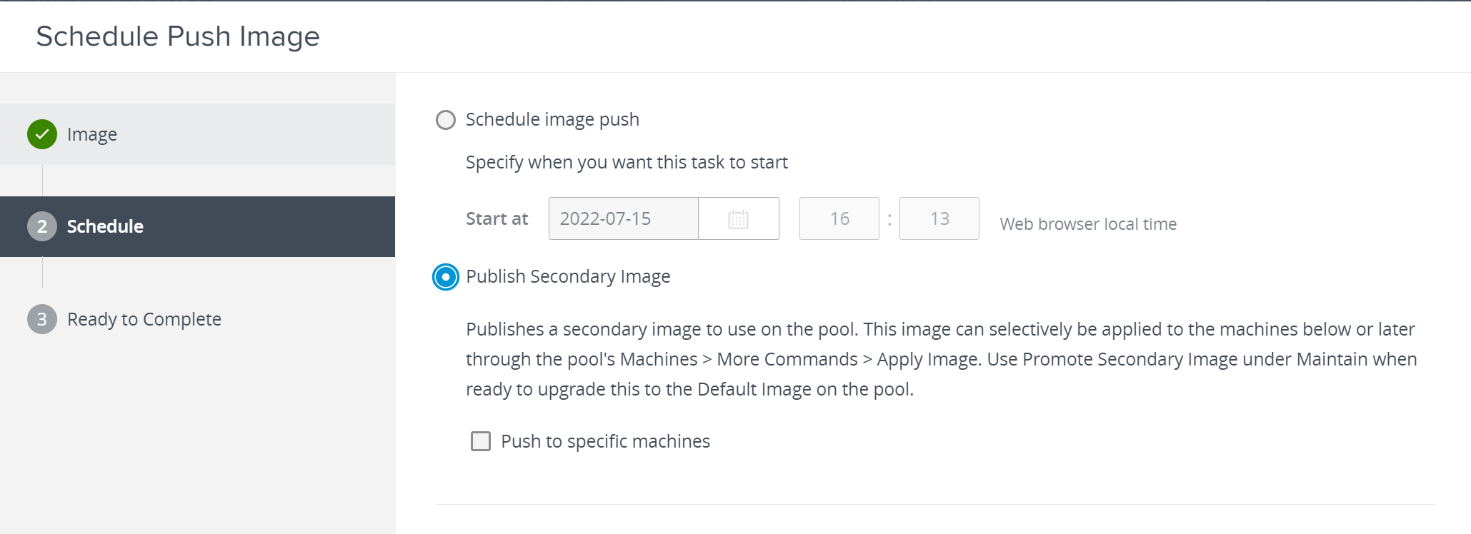
    We select the option to publish it as a second image

    Immagine che contiene testo

Descrizione generata automaticamente

    If we want to select now the VM IC on which to push we put the flag to:

    In my case we will select after the VMs ICs

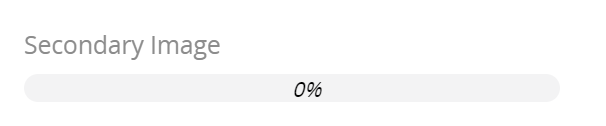
    We wait for the secondary image to be ready for deployment

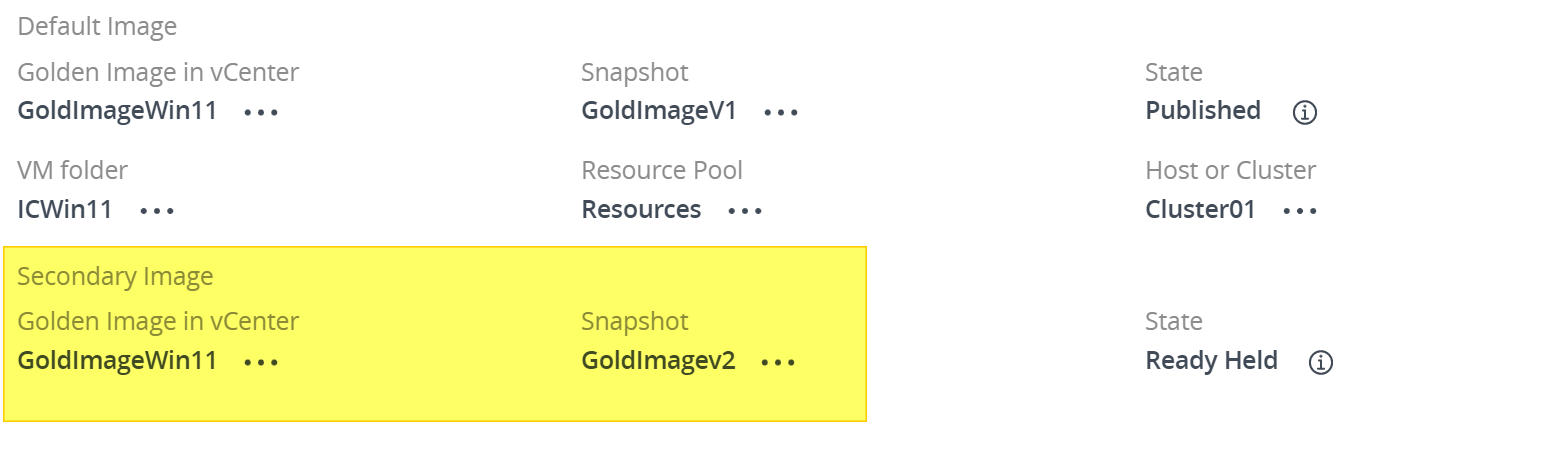
    When it is ready we will be able to see the following in the details of the pool

    !

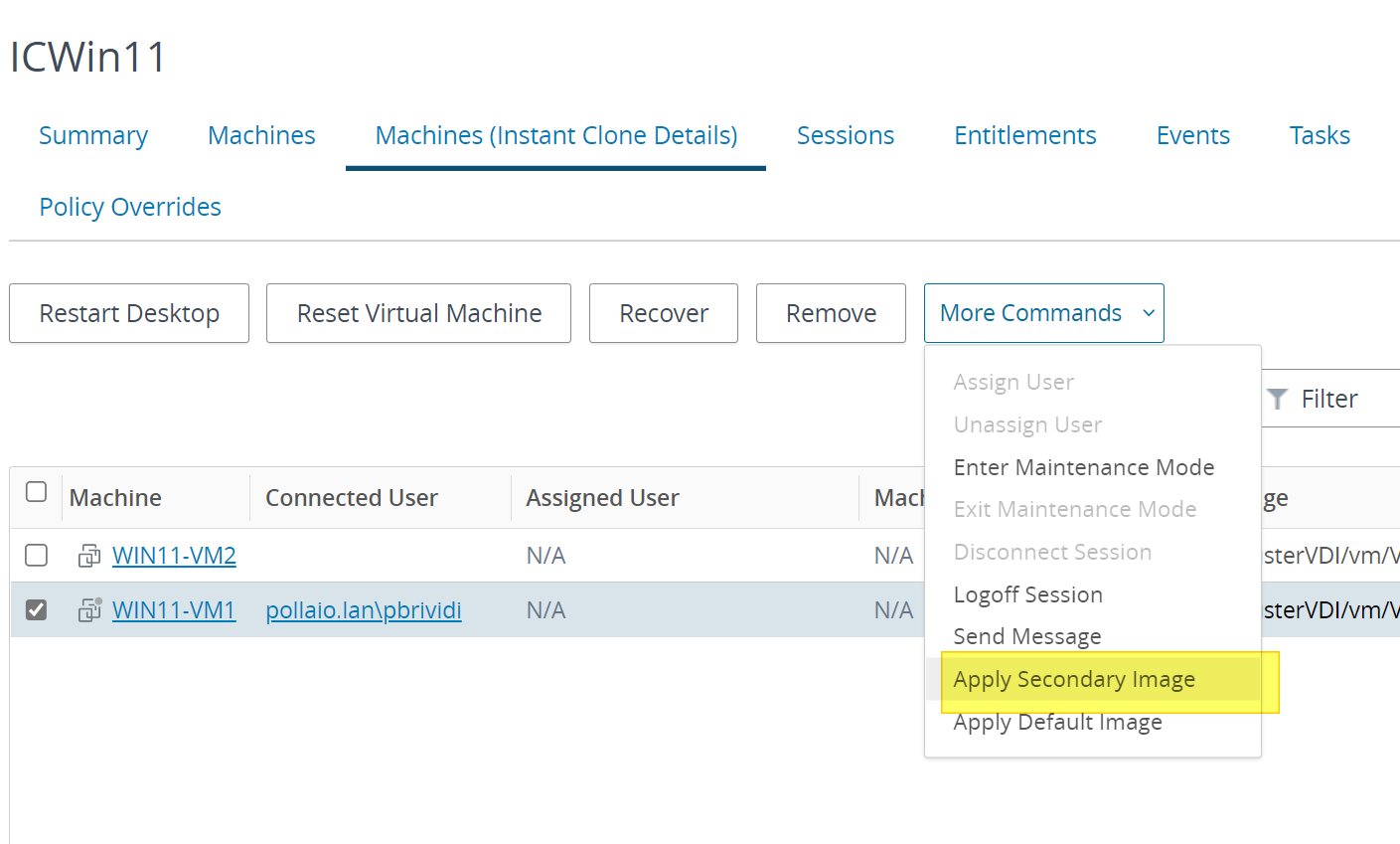
    At this point in the “Machines (Instant Clone Details)” menu, you will enable the following option:

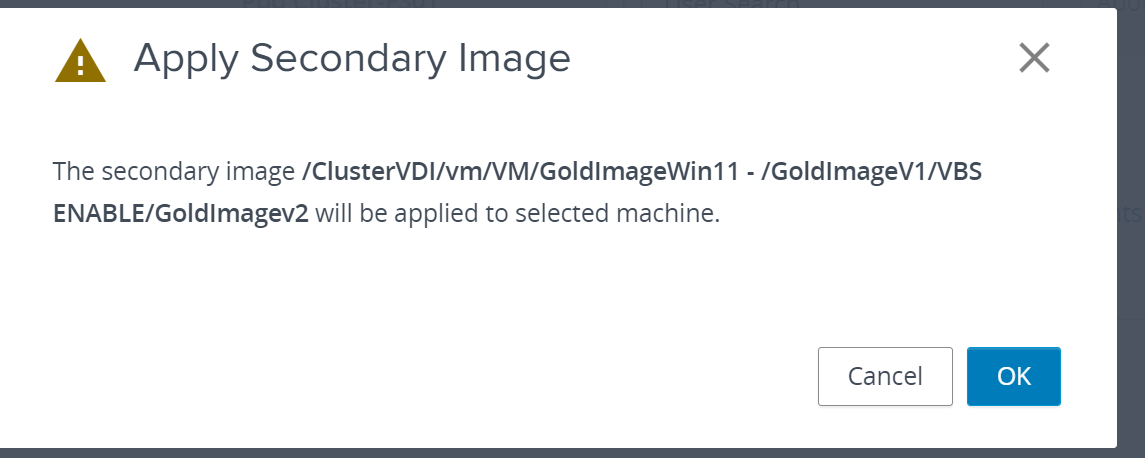
    We select the VM on which we want to apply the image and proceed:

    Immagine che contiene testo

Descrizione generata automaticamente

    And we wait for this to be applied

    Immagine che contiene testo

Descrizione generata automaticamente

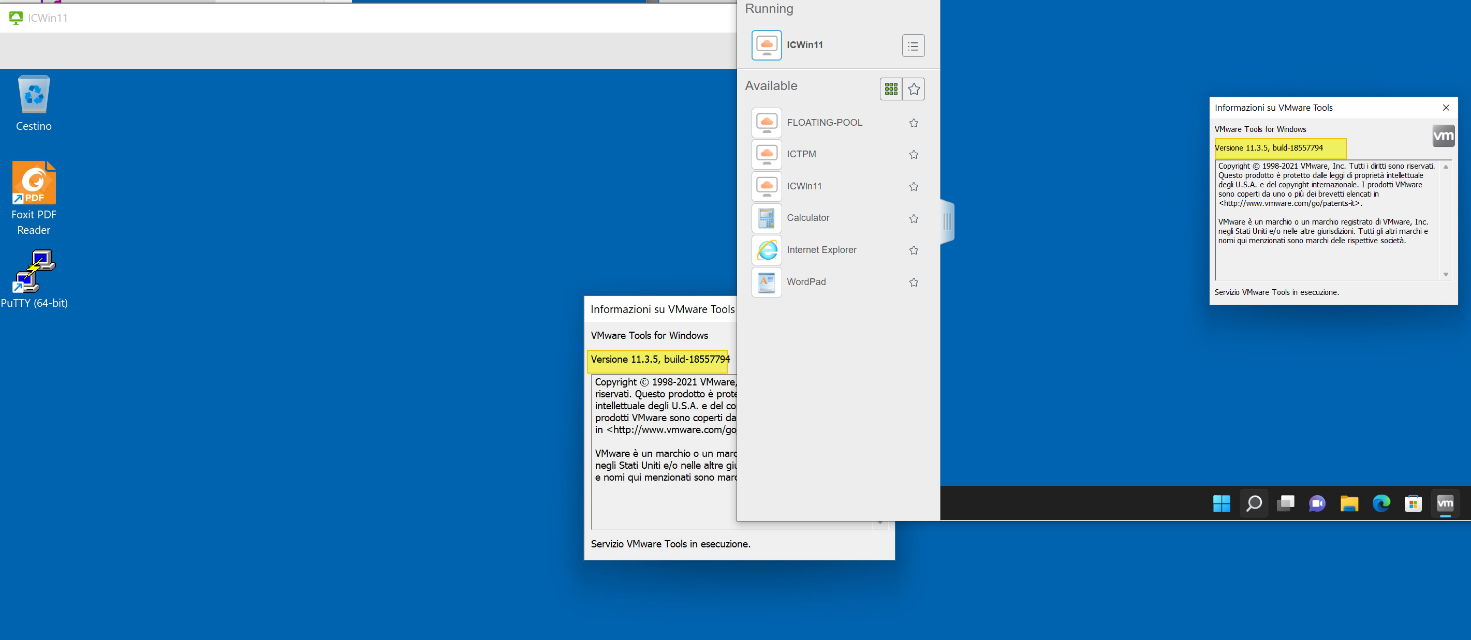
    Let’s try to connect with two different users to the same pool to see the differences between the two VMs and we will notice that one IC has the updated VMware tools and the other does not

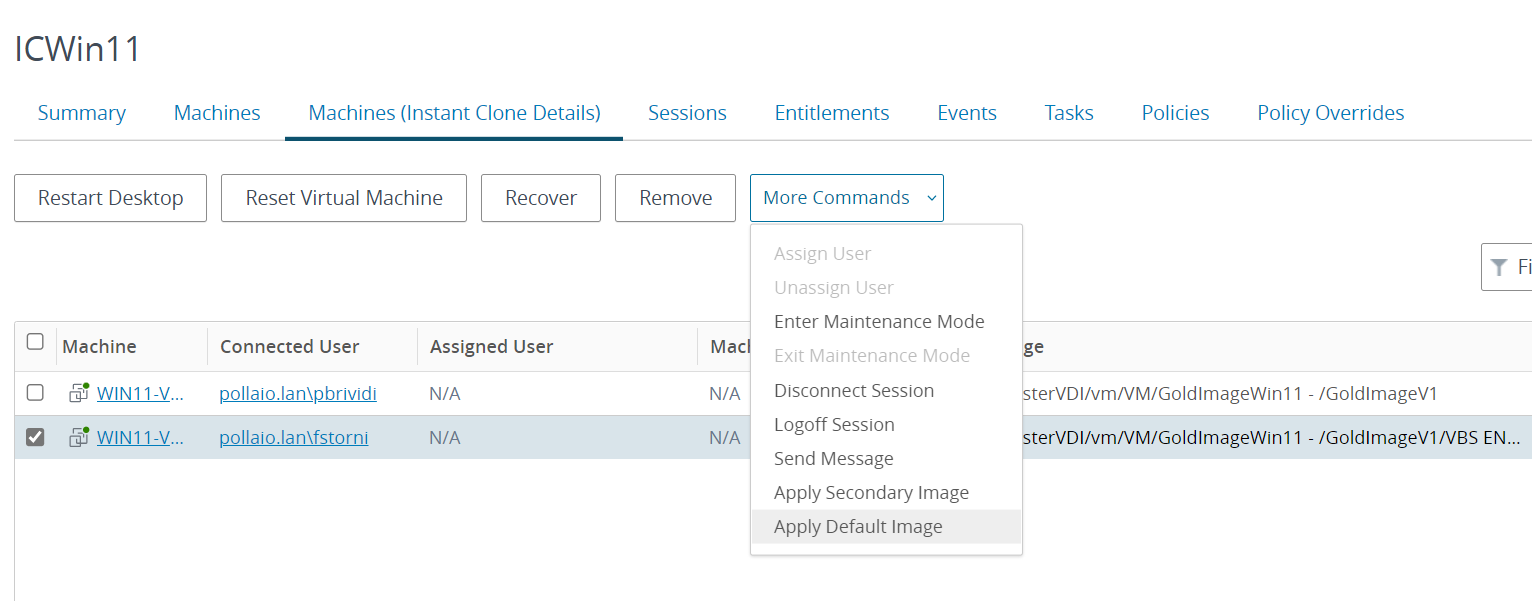
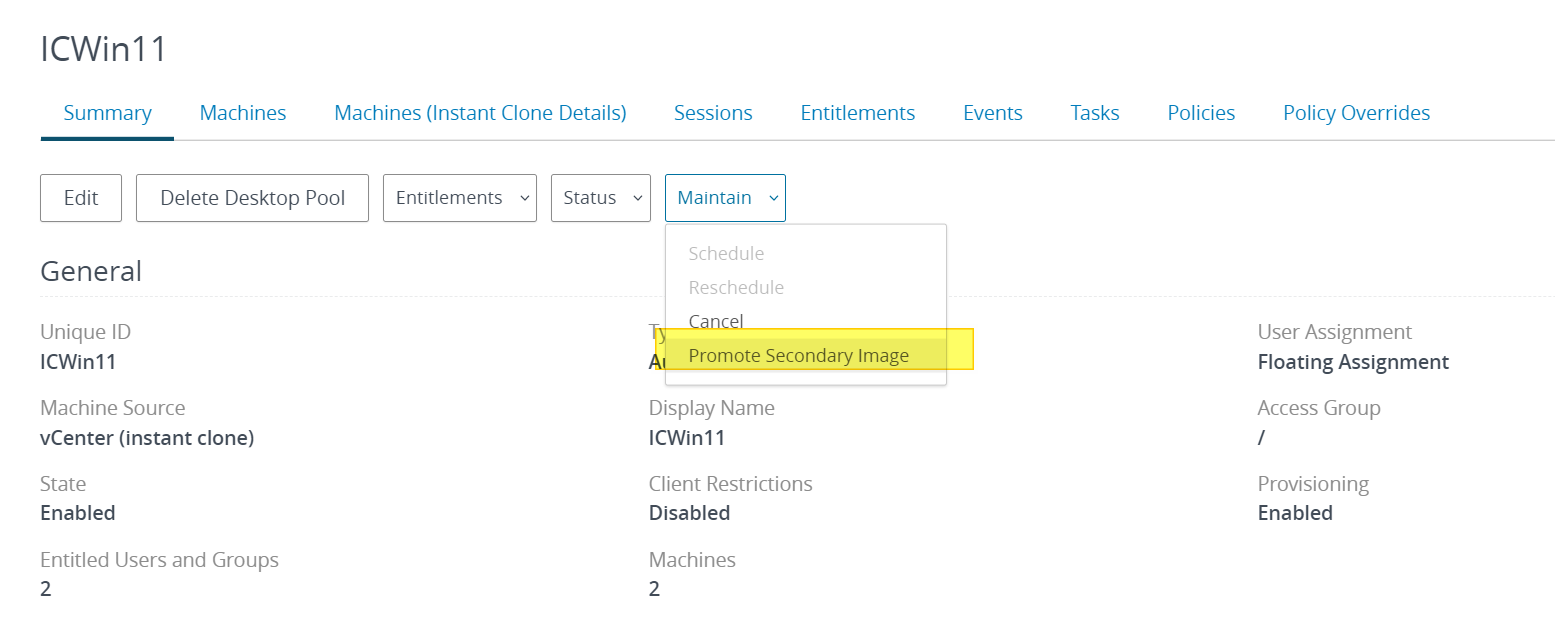
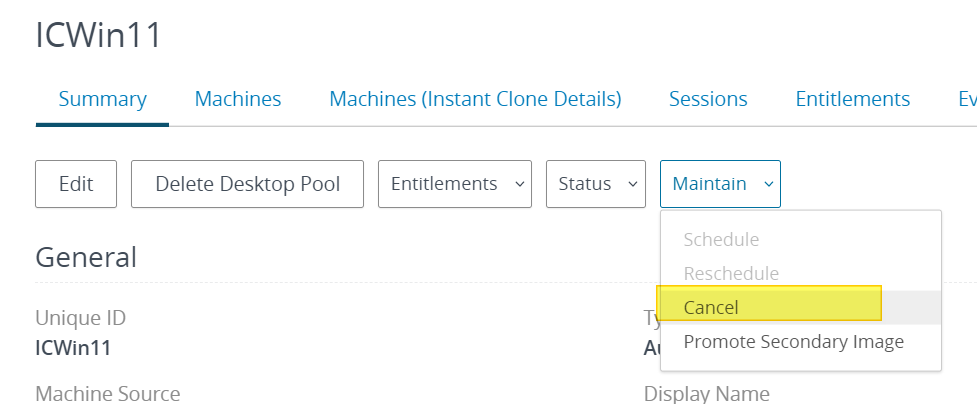
    Once all the tests of the changes have been carried out, we have three possibilities:

    • Apply the default image to the VM on which we tested the subimage
    • Authorize the second image as Default
    • Delete the second image because it doesn’t meet your needs

    Apply the default image to the VM on which we tested the subimage

    Authorize the second image as Default

    Delete the second image because it doesn’t meet your needs

    Immagine che contiene testo

Descrizione generata automaticamente

    Using Secondary Image on Instant Clone Desktop Pool (VMware Horizon)